
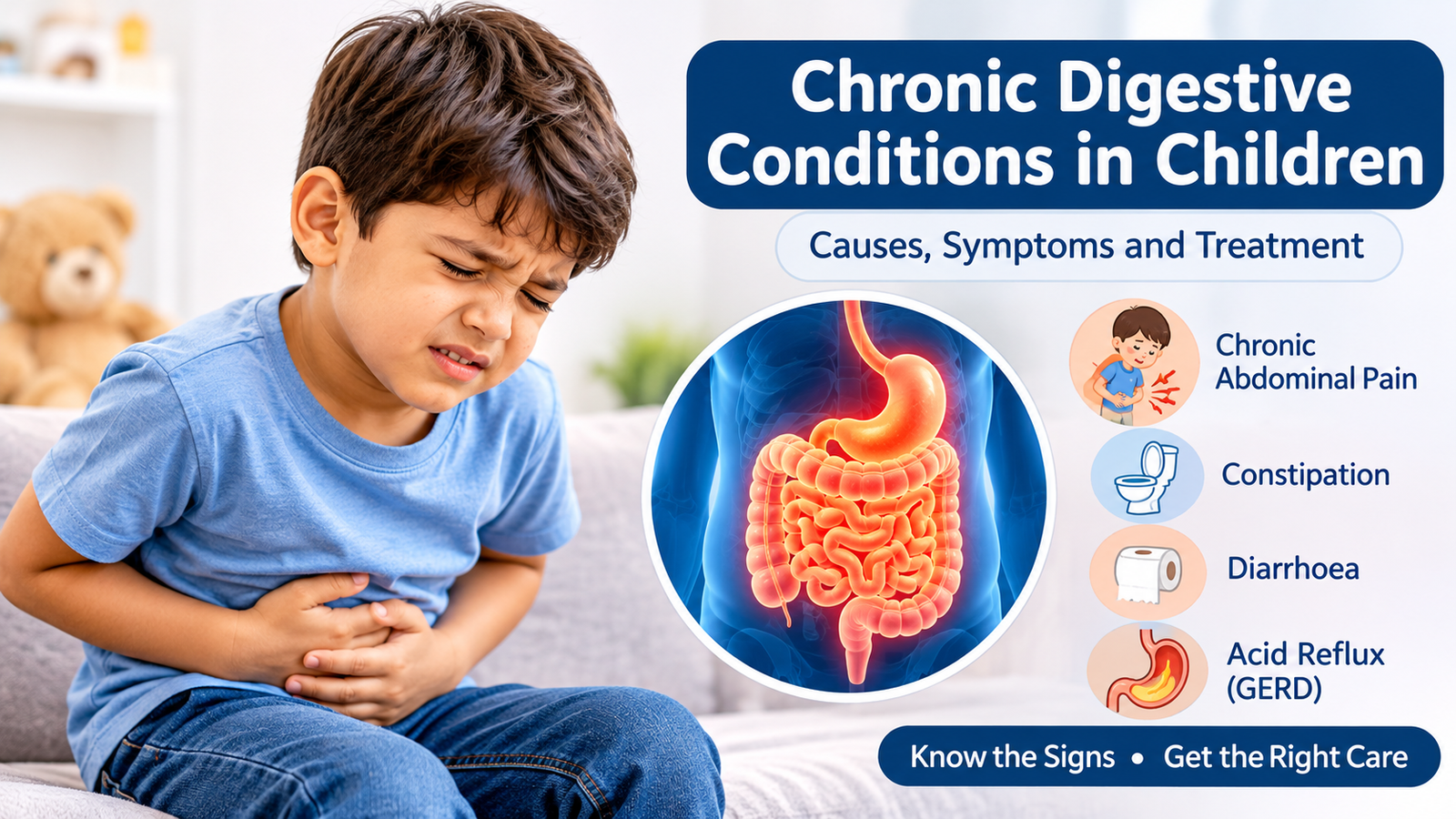
Digestive problems are common during childhood, but when symptoms continue for several weeks or keep returning, they may indicate an underlying digestive condition. Chronic digestive problems can affect a child’s appetite, nutrition, growth, school activities and overall quality of life.
Conditions such as chronic constipation, gastroesophageal reflux disease (GERD), celiac disease and inflammatory bowel disease (IBD) require proper evaluation and management. Understanding the warning signs can help parents seek timely medical advice and support their child’s digestive health.
What Are Chronic Digestive Conditions?
Chronic digestive conditions are disorders that affect the digestive system over an extended period or cause recurring symptoms. They may involve the stomach, intestines, oesophagus or other digestive organs.
Some conditions are related to inflammation, immune responses or food sensitivities, while others involve changes in gut function or bowel movements. Symptoms and severity can vary from child to child, making an accurate diagnosis important.
Common Chronic Digestive Conditions in Children
1. Chronic Constipation
Chronic constipation is one of the common digestive concerns in children. It may cause infrequent bowel movements, hard stools, excessive straining, abdominal pain and discomfort while passing stools. Some children may also avoid using the toilet because they fear pain, which can make the problem worse.
A balanced diet with adequate fibre, sufficient water, regular toilet habits and appropriate medical guidance can help manage constipation.
2. Gastroesophageal Reflux Disease (GERD)
GERD occurs when stomach contents repeatedly flow back into the oesophagus, causing irritation and discomfort. Children may experience frequent vomiting, heartburn, stomach pain, sour burps, feeding difficulties or difficulty swallowing.
Persistent reflux symptoms should be evaluated by a doctor, particularly when they affect feeding, sleep or growth.
3. Celiac Disease
Celiac disease is an autoimmune condition in which consuming gluten, a protein found in wheat, barley and rye, triggers damage to the small intestine. It can interfere with nutrient absorption and may affect a child’s growth.
Symptoms can include chronic diarrhoea, constipation, bloating, abdominal pain, poor weight gain, fatigue and nutritional deficiencies. Diagnosis usually involves blood tests and, when indicated, an intestinal biopsy. Children should not start a gluten-free diet before appropriate testing unless advised by their doctor.
4. Inflammatory Bowel Disease (IBD)
Inflammatory bowel disease includes conditions such as Crohn’s disease and ulcerative colitis. These conditions cause chronic inflammation in the digestive tract.
Children may experience recurring abdominal pain, persistent diarrhoea, blood in stools, fatigue, reduced appetite, weight loss or delayed growth. IBD requires specialist evaluation and long-term management to control inflammation and support healthy development.
5. Irritable Bowel Syndrome (IBS)
IBS is a functional digestive disorder that can cause recurring abdominal pain associated with changes in bowel habits, including constipation, diarrhoea or both. Unlike IBD, IBS does not cause visible inflammation or permanent damage to the digestive tract.
Management may include identifying individual food triggers, improving bowel habits, maintaining a balanced diet and addressing factors such as stress and sleep.
Common Symptoms Parents Should Watch For
Chronic digestive conditions may produce symptoms that appear gradually or occur repeatedly. Parents should pay attention to persistent abdominal pain, frequent bloating, constipation, recurring diarrhoea, vomiting, blood in stools, poor appetite and unexplained weight changes.
Poor weight gain, delayed growth, unusual tiredness and repeated nutritional deficiencies may also indicate that a digestive problem is affecting the child’s overall health.
What Causes Chronic Digestive Problems?
The causes depend on the specific condition. Some digestive disorders are associated with autoimmune responses, genetic factors, inflammation or food-related reactions. Others may involve gut sensitivity, bowel movement difficulties or changes in digestive function.
Dietary habits, inadequate fluid intake and withholding stools can contribute to certain problems, particularly constipation. However, persistent symptoms should not automatically be attributed to diet alone.
How Are Chronic Digestive Conditions Diagnosed?
Diagnosis begins with a detailed medical history and physical examination. The doctor may ask about the child’s eating habits, bowel movements, symptom duration, family history and growth pattern.
Depending on the suspected condition, investigations may include blood tests, stool tests, ultrasound, endoscopy or colonoscopy. Not every child needs all these tests; the choice depends on the symptoms and clinical findings.
Early and accurate diagnosis helps identify the underlying cause and prevents unnecessary dietary restrictions or treatments.
Treatment and Management
Treatment depends on the condition and its severity. It may include medication, dietary adjustments, nutritional support and changes in daily habits. Children with celiac disease need a medically guided gluten-free diet, while children with IBD may require specialist treatment to control inflammation.
For constipation, regular toilet routines, adequate fluids and appropriate dietary fibre can be helpful. Children with GERD may benefit from individualised feeding and lifestyle adjustments alongside prescribed treatment.
Regular follow-up is important to monitor symptoms, nutritional status and physical growth.
When Should Parents Consult a Pediatric Gastroenterologist?
Parents should seek medical advice if a child experiences recurring abdominal pain, persistent diarrhoea, prolonged constipation, repeated vomiting, poor appetite or unexplained weight loss.
Blood in stools, persistent fever, dehydration, severe abdominal pain or significant growth concerns require prompt medical evaluation. Severe pain, marked lethargy or signs of serious dehydration may require emergency care.
A pediatric gastroenterologist can evaluate ongoing digestive symptoms, recommend appropriate investigations and guide treatment according to the child’s needs.
Frequently Asked Questions
1. Are chronic digestive conditions common in children?
Digestive complaints are common during childhood. Some children experience recurring symptoms due to functional disorders, while others may have an underlying medical condition that requires evaluation.
2. Can chronic digestive problems affect a child’s growth?
Yes. Conditions that interfere with nutrient absorption, appetite or normal digestion may affect weight gain and physical development.
3. Is chronic constipation a serious condition?
Constipation is often manageable, but prolonged symptoms can cause pain, stool withholding and other complications. Persistent constipation should be assessed by a doctor.
4. Can chronic digestive conditions be cured?
Some conditions can resolve or be controlled effectively, while others require long-term management. Treatment depends on the diagnosis and the child’s individual health needs.
5. When should I take my child to a pediatric gastroenterologist?
Consult a specialist when digestive symptoms persist, repeatedly return, affect eating or daily activities, or are associated with poor growth, blood in stools or unexplained weight loss.