
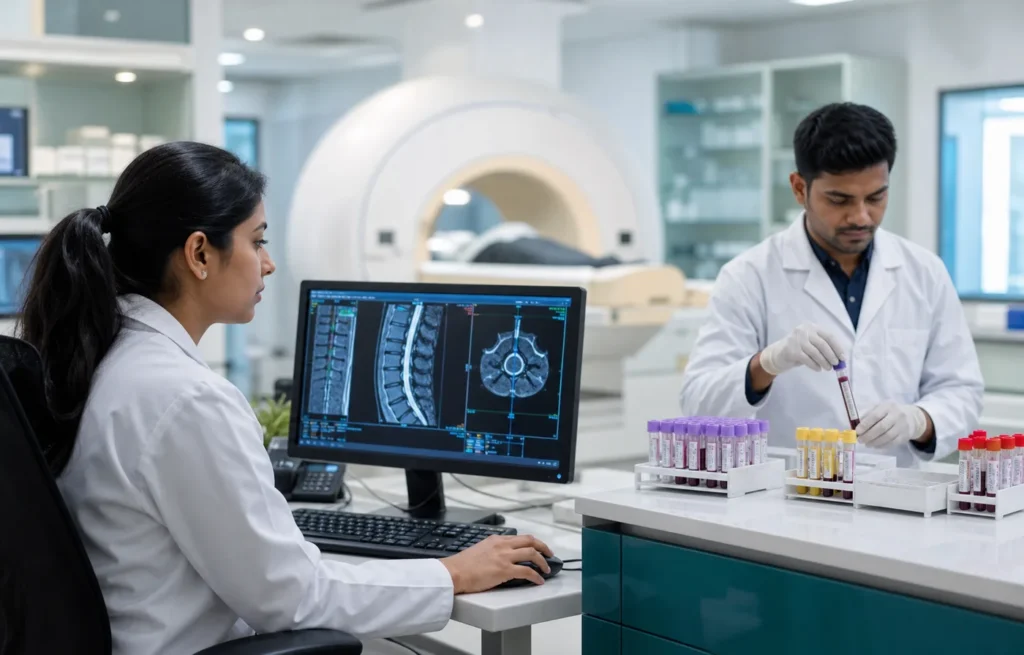
Diagnostic investigations play an important role in identifying the underlying cause of pain and developing an effective, personalised treatment plan. Pain may arise from muscles, joints, nerves, the spine, or other structures in the body, and its source is not always immediately apparent. A systematic diagnostic approach helps distinguish between different pain conditions, assess their severity, and determine the most appropriate course of treatment. Dr. Pandu Chouhan focuses on a comprehensive evaluation of each patient’s symptoms, medical history, and clinical findings to guide accurate diagnosis and evidence-based pain management.
Persistent or recurring pain can develop due to several underlying conditions, including spinal disorders, arthritis, muscle injuries, nerve compression, inflammation, and degenerative changes associated with ageing. In some cases, pain may follow an accident, surgery, or repetitive physical strain. Conditions such as sciatica, cervical spondylosis, lumbar disc problems, and neuropathic pain may require specialised diagnostic evaluation to identify the affected structures. Understanding the possible causes of pain helps doctors select relevant investigations rather than relying on unnecessary tests and ensures that treatment addresses the underlying condition whenever possible.
The symptoms that indicate a need for diagnostic investigation vary depending on the location and nature of the pain. Patients may experience persistent back or neck pain, joint stiffness, muscle tenderness, burning or shooting sensations, tingling, numbness, or pain that radiates into the arms or legs. Some individuals may also notice reduced mobility, weakness, difficulty performing everyday activities, or pain that becomes worse during movement or at rest. Keeping track of when the pain begins, what makes it better or worse, and whether other symptoms occur can provide valuable information during a medical consultation and help guide further testing.
The diagnostic process begins with a detailed medical history and physical examination, including an assessment of pain location, intensity, duration, movement limitations, and associated symptoms. Depending on the clinical findings, Dr. Pandu Chouhan may recommend appropriate investigations such as X-rays to assess bone structure, MRI scans to examine discs, nerves, and soft tissues, or CT scans to obtain detailed images of the affected area. Blood tests may be advised when infection, inflammation, or another systemic condition is suspected. In selected cases, nerve conduction studies, electromyography (EMG), or diagnostic nerve blocks may help evaluate nerve function or identify the source of pain. Not every patient requires every investigation; tests are selected according to individual symptoms, examination findings, and medical needs.
Treatment recommendations depend on the diagnosis, severity of symptoms, general health, and the patient’s response to previous therapies. Once the relevant findings have been reviewed, the treatment plan may include medication, physiotherapy, posture correction, activity modification, and targeted rehabilitation. For selected conditions, interventional pain management procedures, such as image-guided injections or nerve blocks, may help reduce pain and improve function. Diagnostic procedures can also provide useful information when the source of pain remains uncertain. The aim is to develop a personalised treatment strategy that addresses the underlying problem, supports mobility, and improves quality of life while minimising unnecessary interventions and medication-related risks.
Following diagnostic tests or pain management procedures, patients should follow their doctor’s instructions regarding activity, medication, wound care, and follow-up appointments. After imaging investigations, most patients can resume their usual activities unless specific preparation or recovery instructions have been provided. Following an injection or other interventional procedure, temporary soreness or mild discomfort may occur, and patients may need to avoid strenuous activity for a recommended period. It is important to attend follow-up consultations so that investigation results can be reviewed, treatment effectiveness can be assessed, and the care plan can be adjusted when necessary. Patients should also communicate any new symptoms, unexpected reactions, or concerns during recovery.
Most routine diagnostic investigations are safe when performed for appropriate medical reasons, although certain tests carry specific considerations. X-rays and CT scans involve exposure to ionising radiation, while MRI examinations require screening for certain implanted devices, metallic objects, and other safety concerns. Contrast agents used in selected imaging studies may cause allergic reactions or require additional precautions in patients with particular medical conditions. Electromyography and nerve conduction studies may cause temporary discomfort, while diagnostic injections and other invasive procedures carry uncommon risks such as bleeding, infection, or temporary changes in sensation. Patients should inform their doctor about allergies, current medications, pregnancy, implanted devices, and relevant medical conditions before undergoing investigations. Understanding the potential benefits and risks helps ensure that each test is selected and performed appropriately.
Patients should consult a pain management specialist when pain persists, repeatedly returns, interferes with sleep or daily activities, or does not improve with initial treatment. Medical evaluation is particularly important when pain is accompanied by unexplained numbness, tingling, weakness, restricted movement, or symptoms that progressively worsen. Immediate medical attention is necessary for severe or sudden pain associated with chest discomfort, difficulty breathing, major injury, fever with severe back pain, new loss of bladder or bowel control, or numbness around the groin or saddle area. Prompt assessment can help identify serious underlying conditions and prevent delays in appropriate treatment. With timely consultation and carefully selected diagnostic investigations, Dr. Pandu Chouhan aims to support accurate diagnosis, informed treatment decisions, and better long-term pain management outcomes.
Providing expert, compassionate care for children’s digestive health, nutrition, growth and gastrointestinal conditions.
9:00 AM – 6:00 PM (By Appointment Only)
© Copyright Dr. Pandu Chauhan 2026. All Rights Reserved. | Developed by Prigmasoft Technologies.
No WhatsApp Number Found!
WhatsApp us