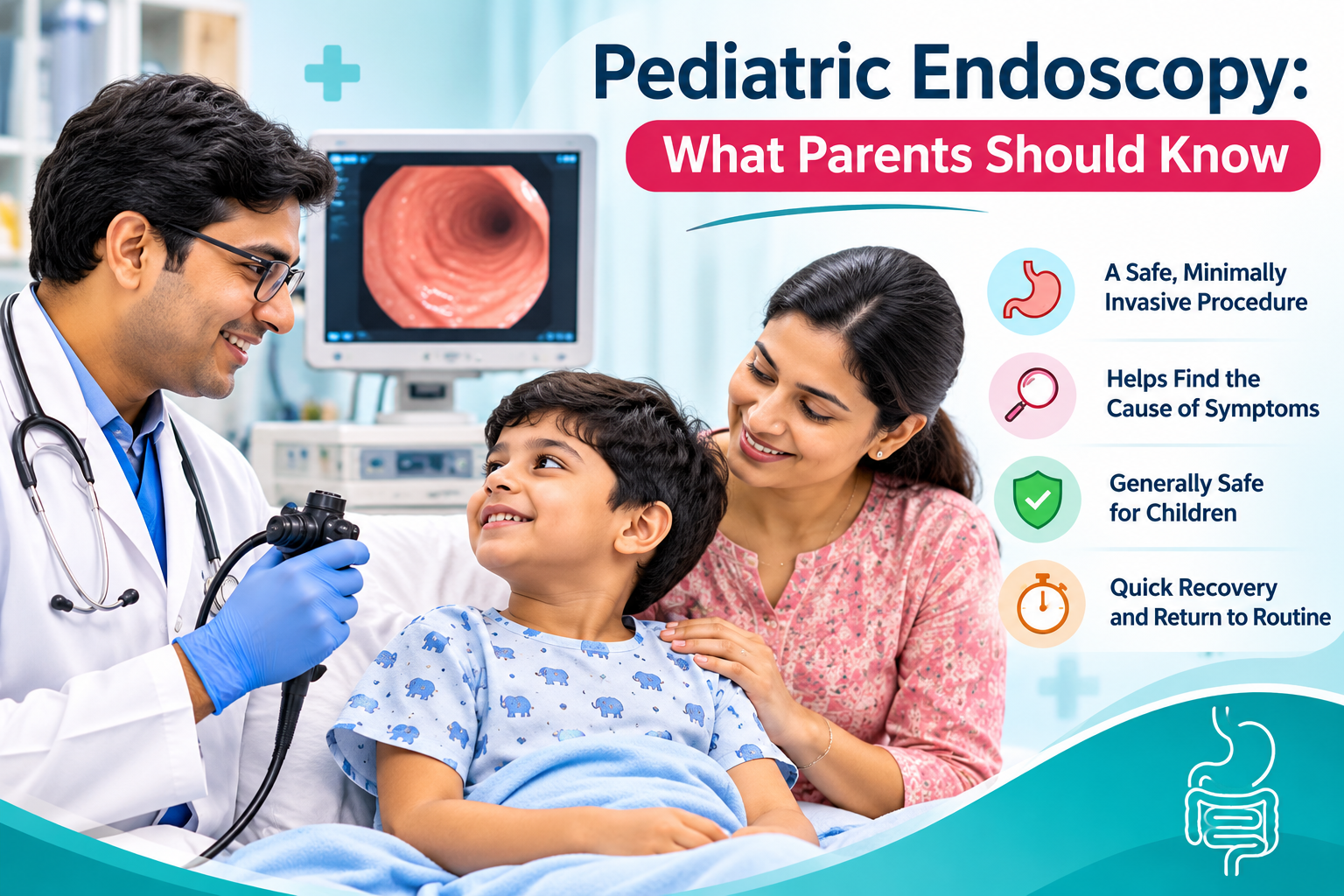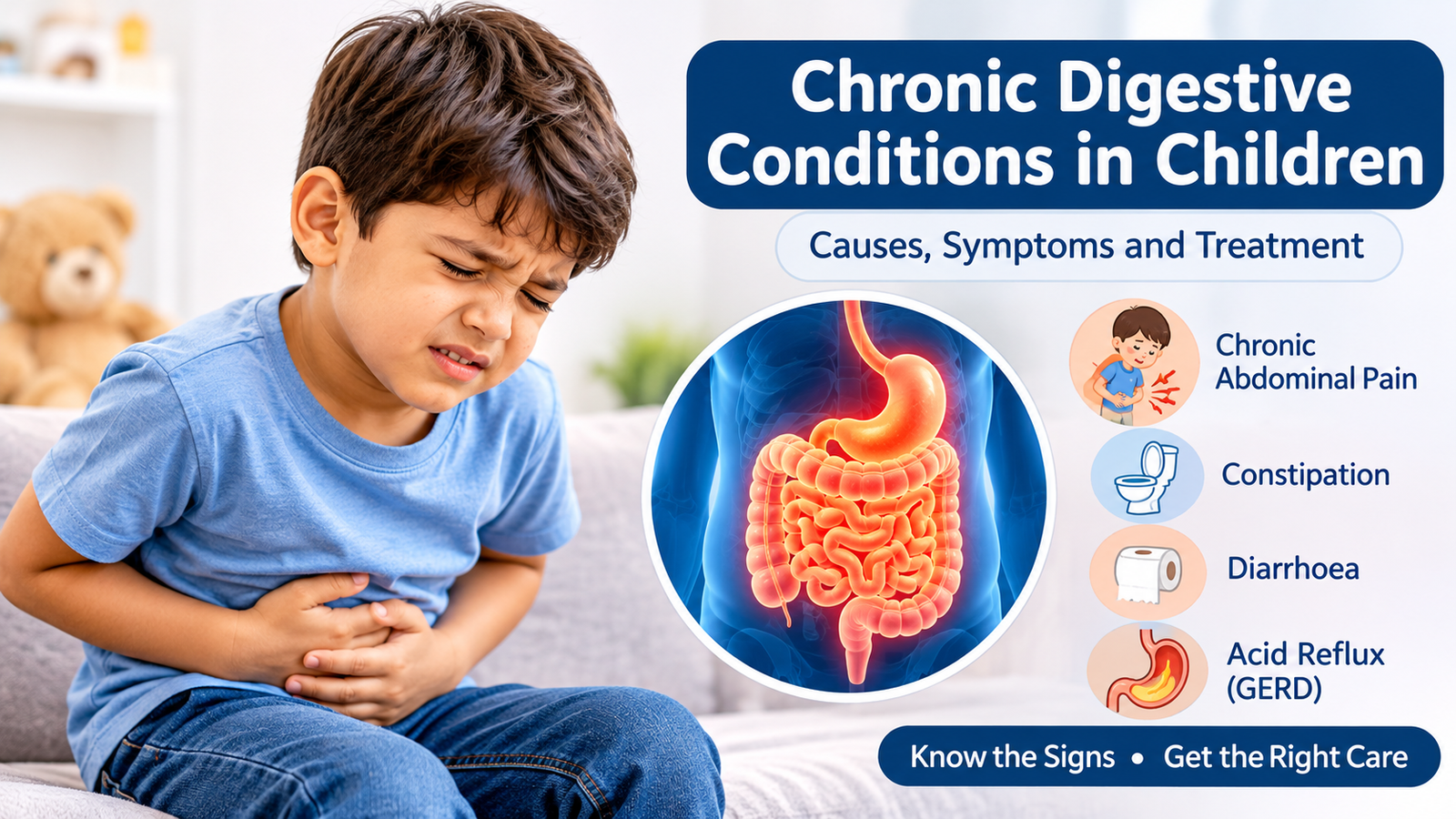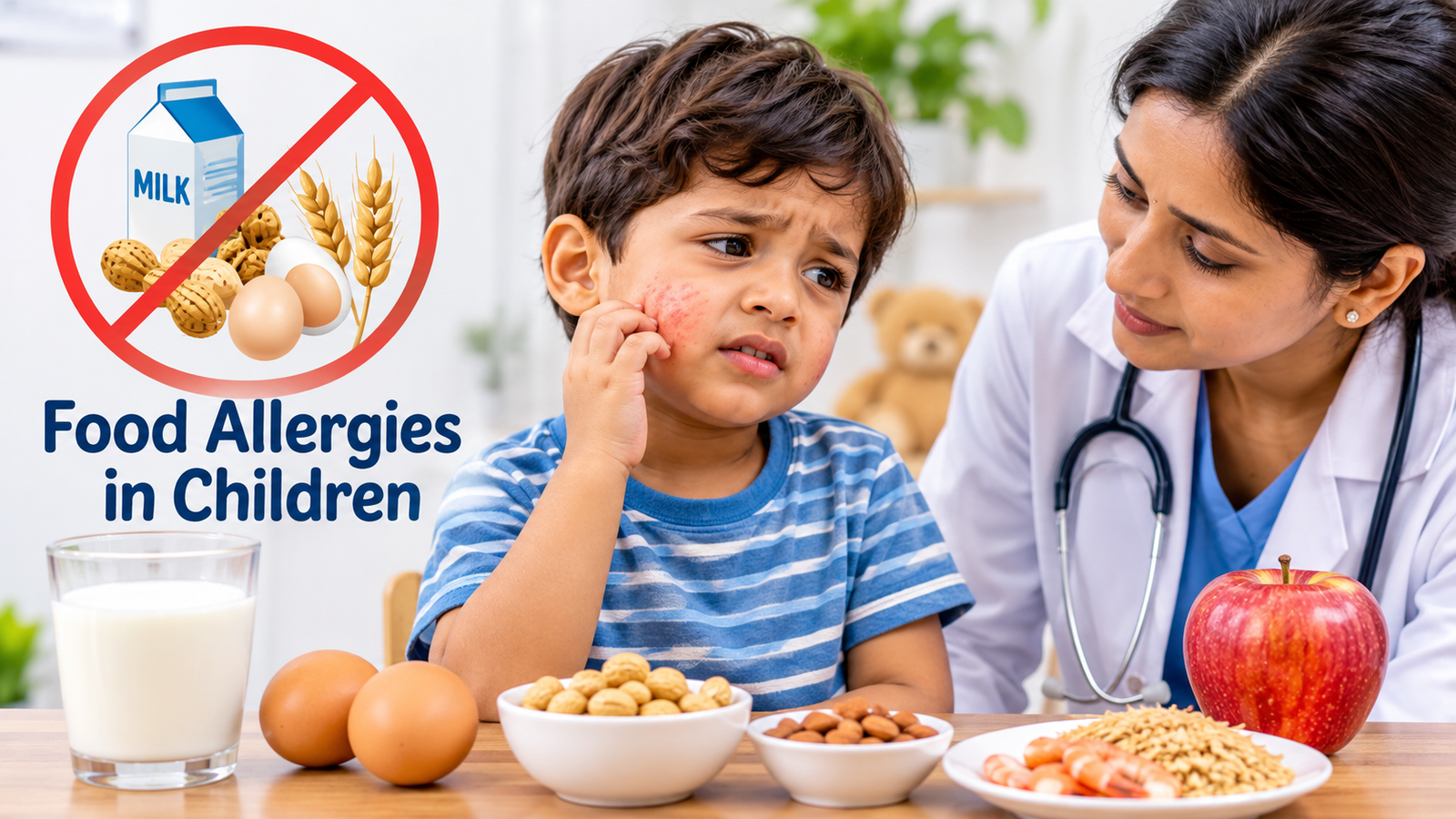

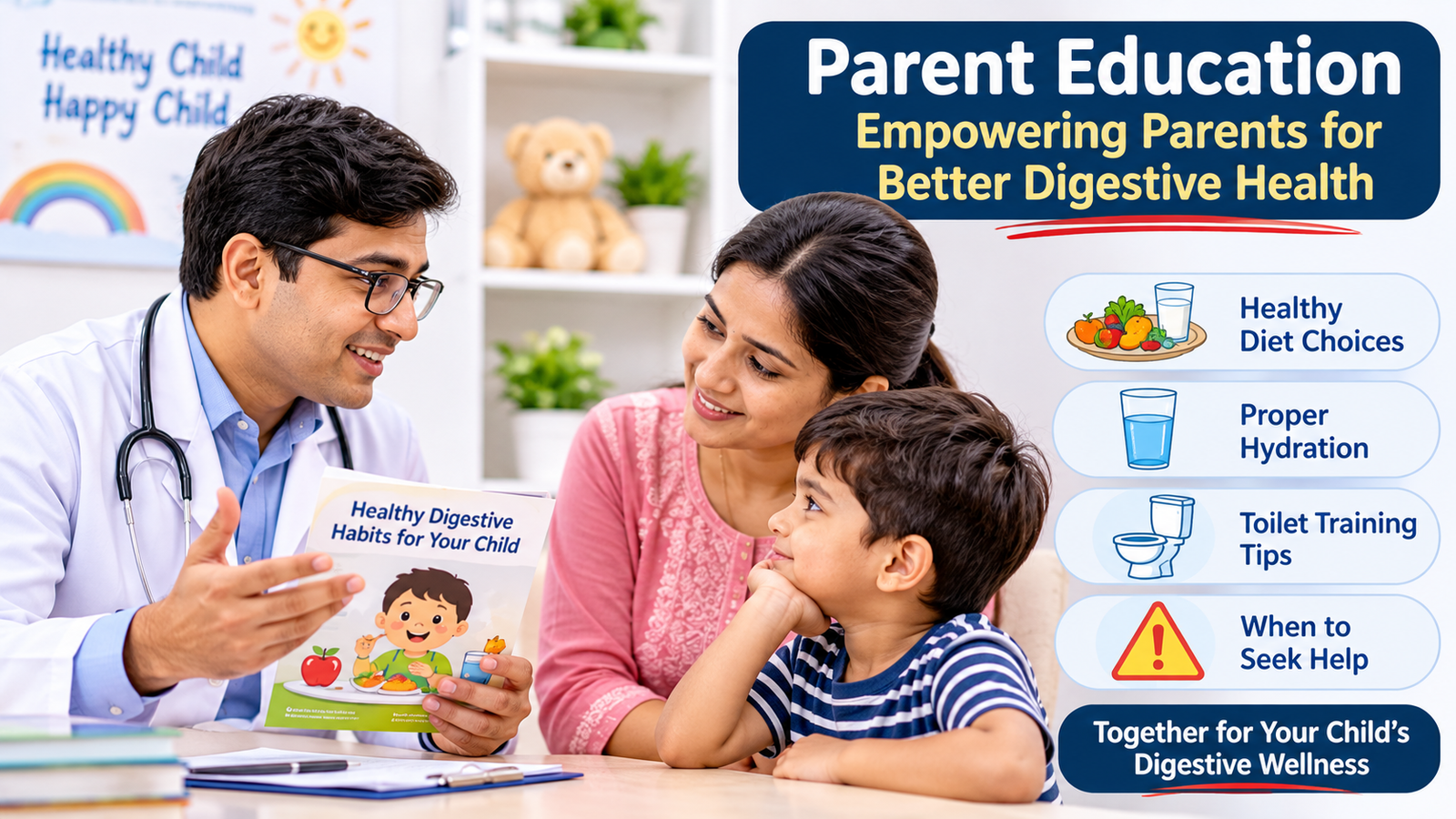
Digestive health plays an important role in a child’s overall growth, nutrition and development. Occasional stomach discomfort, constipation or changes in bowel movements may happen during childhood. However, when these symptoms occur frequently or continue for a long time, they should not be ignored.
Parents are often the first to notice changes in their child’s eating habits, bowel movements and daily behaviour. Recognising early warning signs can help identify digestive problems and ensure that children receive appropriate medical attention.
1. Frequent or Persistent Abdominal Pain
Occasional stomach pain may occur due to gas, indigestion or temporary digestive disturbances. However, repeated abdominal pain, particularly when it interferes with eating, sleeping, playing or attending school, may require medical evaluation.
Parents should observe where the pain occurs, how often it happens and whether it is associated with meals or bowel movements.
2. Frequent Constipation
Constipation is a common digestive problem in children. Signs include hard or dry stools, infrequent bowel movements, excessive straining and pain while passing stools.
Some children may avoid going to the toilet because they fear discomfort. If constipation continues or keeps returning, a doctor can help identify the cause and recommend suitable management.
3. Repeated Diarrhoea
Occasional diarrhoea may occur due to infections or dietary changes. However, persistent or recurring loose stools can affect hydration and nutrient absorption.
Parents should watch for reduced urination, dry mouth, unusual tiredness and other signs of dehydration. Severe dehydration or a child who is unusually sleepy or difficult to wake requires urgent medical attention.
4. Repeated Vomiting or Reflux
Frequent vomiting, persistent regurgitation, heartburn or complaints of sour burps may indicate a digestive issue. In infants, some milk regurgitation can be normal, but repeated forceful vomiting, feeding difficulties or poor weight gain should be assessed by a doctor.
5. Poor Appetite and Unexplained Weight Changes
A child’s appetite can vary, but a prolonged loss of appetite, unexplained weight loss or difficulty gaining weight may indicate an underlying health concern.
Digestive conditions can sometimes affect how the body absorbs nutrients. Monitoring a child’s growth over time helps doctors identify potential concerns.
6. Blood or Mucus in Stools
Blood in a child’s stool should never be ignored. It may occur due to conditions such as anal fissures, infections or intestinal inflammation. Persistent mucus, particularly when accompanied by diarrhoea, abdominal pain or fever, also needs medical assessment.
Parents should inform the doctor about the colour, frequency and appearance of any unusual stools.
7. Excessive Bloating and Gas
Occasional gas and bloating are common. However, frequent abdominal swelling, discomfort after meals or excessive gas may be associated with constipation, food intolerance or other digestive conditions.
A doctor can help determine whether dietary changes or further investigations are necessary.
When Should Parents Consult a Pediatric Gastroenterologist?
Parents should consult a pediatric gastroenterologist when digestive symptoms persist, repeatedly return or begin affecting a child’s nutrition, growth, sleep or daily activities.
Severe abdominal pain, blood in stools, repeated vomiting, signs of dehydration, green vomit or significant weakness require prompt medical evaluation. Difficulty breathing, collapse or a child who is difficult to wake requires emergency care.
How Can Parents Support Their Child’s Digestive Health?
Healthy daily habits can support normal digestion. Offer a balanced diet with fruits, vegetables and age-appropriate fibre, encourage adequate fluid intake and establish regular meal and toilet routines.
Encourage physical activity and avoid unnecessary dietary restrictions or self-medication. Keeping a simple record of symptoms, foods eaten and bowel movements can also help the doctor during an evaluation.
Frequently Asked Questions
1. Are stomach aches normal in children?
Occasional stomach aches are common, but frequent or persistent abdominal pain should be evaluated, especially when it affects daily activities or is associated with other symptoms.
2. When is constipation a concern?
Constipation needs medical attention when it persists, causes pain, leads to stool withholding or is associated with poor appetite or other concerning symptoms.
3. Can digestive problems affect a child’s growth?
Yes. Some digestive conditions can affect appetite or nutrient absorption, potentially influencing weight gain and physical development.
4. Should parents change their child’s diet whenever digestive symptoms occur?
Not necessarily. Unnecessary food restrictions may affect nutrition. Dietary changes should be based on the child’s symptoms and medical advice.
5. When should I seek emergency medical help?
Seek urgent care for severe abdominal pain, blood in stools, repeated vomiting with dehydration, green vomit, significant weakness or other signs of serious illness.