

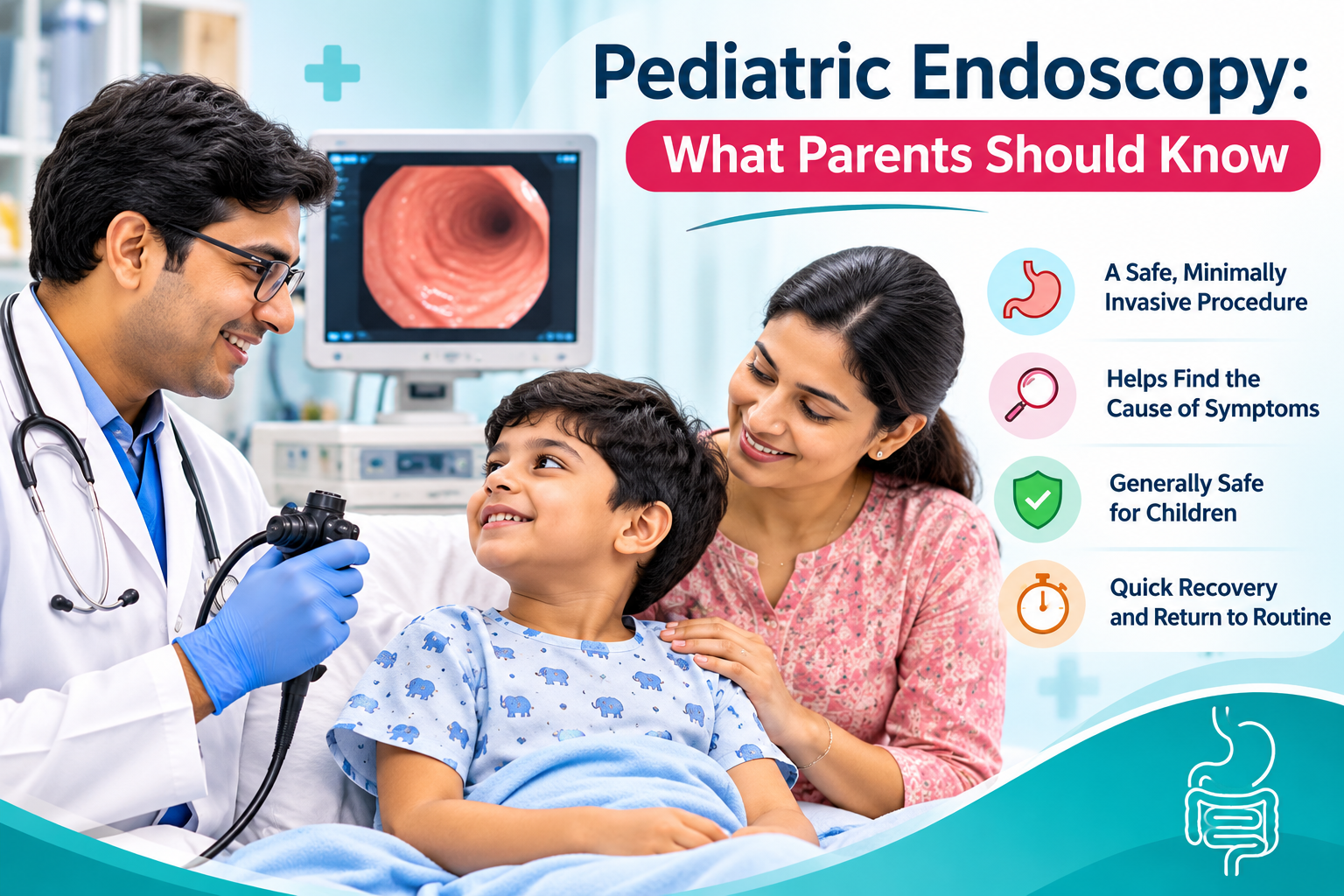
When a child experiences persistent digestive problems such as abdominal pain, vomiting, difficulty swallowing or unexplained weight loss, a doctor may recommend a procedure called pediatric endoscopy. It allows the doctor to examine the inner lining of the upper digestive tract and identify possible causes of the symptoms.
Although the word endoscopy may sound worrying to parents, it is a commonly performed medical procedure that helps doctors understand digestive problems and plan appropriate treatment.
What Is Pediatric Endoscopy?
Pediatric endoscopy, also known as upper gastrointestinal (GI) endoscopy, is a procedure used to examine the oesophagus, stomach and the first part of the small intestine. It is performed using a thin, flexible tube called an endoscope, which has a small camera and light at its tip.
The images captured by the camera help the doctor identify inflammation, ulcers, irritation, bleeding and other abnormalities. Small tissue samples, called biopsies, may also be collected when necessary for further examination.
Why Might a Child Need an Endoscopy?
A pediatric gastroenterologist may recommend an endoscopy when a child has persistent or unexplained digestive symptoms. These may include repeated vomiting, chronic abdominal pain, difficulty swallowing, persistent heartburn, unexplained weight loss or poor growth.
The procedure may also help investigate conditions such as celiac disease, inflammation of the oesophagus, stomach ulcers and certain causes of gastrointestinal bleeding. The decision to perform an endoscopy depends on the child’s symptoms, examination and medical history.
How Is Pediatric Endoscopy Performed?
Before the procedure, the medical team reviews the child’s health and explains the process to the parents. The child generally needs to follow specific fasting instructions so that the stomach is empty during the examination.
Endoscopy in children is usually performed with sedation or general anaesthesia, depending on the child’s age, health and the medical team’s assessment. Once the child is appropriately sedated, the doctor gently passes the flexible endoscope through the mouth into the oesophagus, stomach and upper small intestine.
The camera displays images on a monitor, allowing the doctor to examine the digestive tract. If required, small tissue samples may be collected. The procedure usually takes a relatively short time, although the total hospital visit may be longer because of preparation and recovery.
How Should Parents Prepare Their Child?
Preparation is an important part of a safe endoscopy. Parents should carefully follow the fasting instructions provided by the hospital or medical team. They should also inform the doctor about the child’s current medicines, allergies, existing medical conditions and any previous reactions to anaesthesia.
It can help to explain the procedure to the child in simple, reassuring language. Parents should avoid giving food, drinks or medicines contrary to the instructions provided by the medical team.
Is Endoscopy Safe for Children?
Pediatric endoscopy is generally considered a safe procedure when performed by a trained medical team with appropriate monitoring. However, as with any medical procedure, some risks may occur.
Temporary throat discomfort, bloating or mild nausea can happen after the procedure. Rare complications may include bleeding, infection, breathing-related problems or injury to the digestive tract. The doctor will discuss relevant risks and precautions with the parents before the procedure.
What Happens After the Procedure?
After the endoscopy, the child is monitored until the effects of sedation or anaesthesia have worn off sufficiently. Some children may experience mild throat soreness or temporary bloating, which usually improves on its own.
The medical team will explain when the child can start drinking and eating again and provide any necessary aftercare instructions. If biopsies were collected, the results may take additional time to become available. Parents should follow the doctor’s advice regarding follow-up and treatment.
When Should Parents Consult a Pediatric Gastroenterologist?
Parents should seek medical advice if their child experiences persistent abdominal pain, repeated vomiting, difficulty swallowing, unexplained weight loss, poor growth or other ongoing digestive symptoms.
An endoscopy is not necessary for every child with stomach problems. A pediatric gastroenterologist evaluates the symptoms and recommends investigations only when clinically appropriate.